Which garage door part fails first? What to watch
No maker or trade group ranks which garage door part fails first. Springs wear out on a count, and a door out of balance wears the opener and other parts.

No garage door maker or trade association publishes a ranking of which part fails first. We read the pages from IDC Spring, Clopay, Amarr and DASMA, the door makers' trade association, and none of them puts the parts in order. The percentages you find online, such as a share of emergency calls, come from repair companies and cite no study.
What the makers do say is shorter and more useful. The spring is the part they single out as wearing out on a count. A standard spring is rated for about 10,000 cycles, one cycle is one full open and close, and at four cycles a day that is about seven years (IDC Spring, a spring manufacturer). And a door that is out of balance wears out other parts: DASMA says it "can cause premature wear and tear on other important door components."
So instead of a list in order, here is each part, what its maker says about wear, and who handles it.
Which parts wear and what to watch
Springs
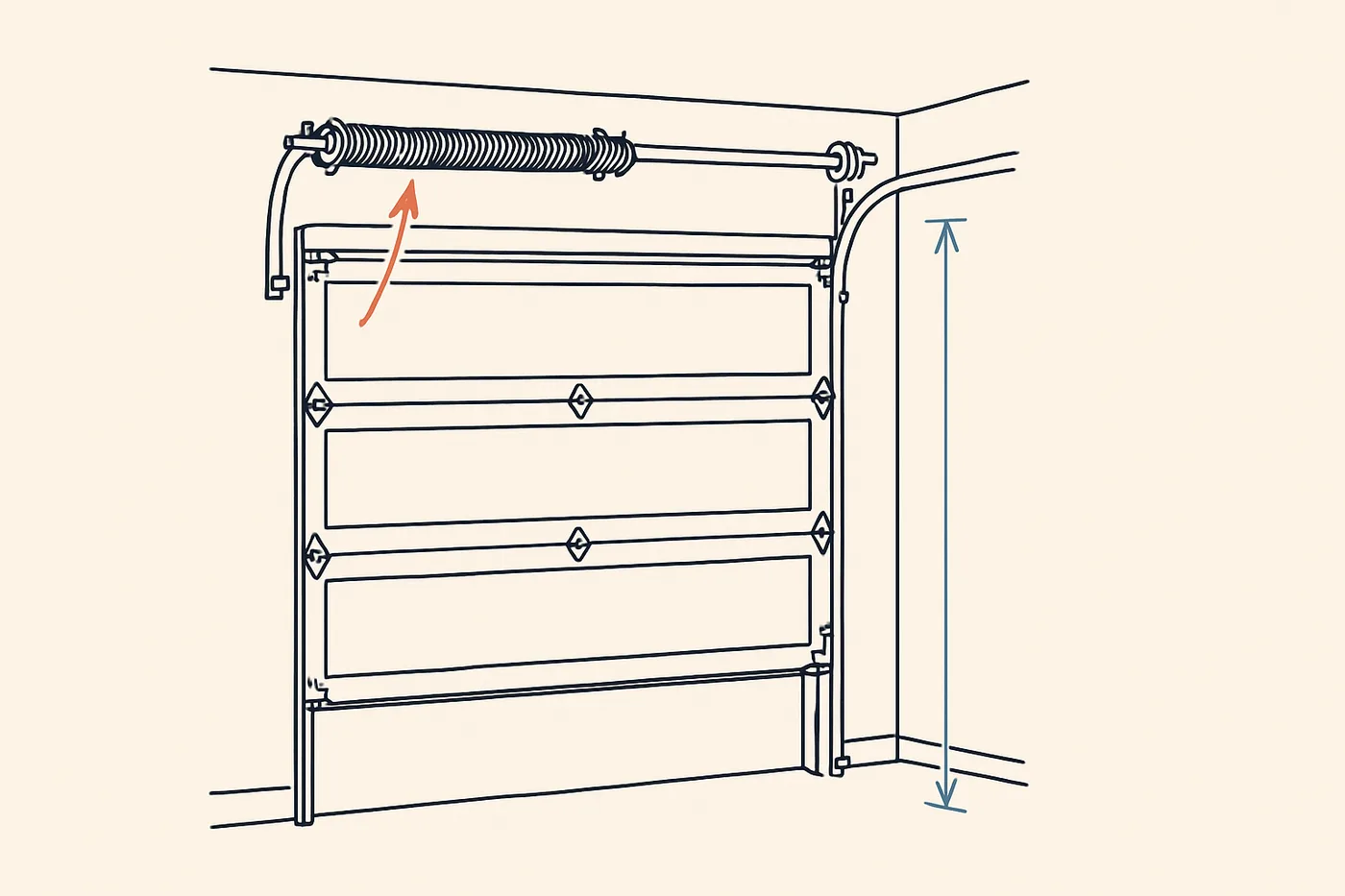
The springs carry the weight of the door. Clopay says torsion and extension springs are under extreme tension and even a small mistake can cause serious injury, calls spring work "not your typical DIY project," and says hiring a qualified professional is "the safest route."
The cycle count is not the whole story. DASMA TDS 190, a technical sheet from the door makers' association, says handling, installation and how the door is used all affect how long a spring lasts. It says rust reduces the strength of spring wire, and that doors in places with extreme heat or cold or frequent rain should be kept closed where possible.
Cold matters too. Clopay's cold weather guide says broken springs happen more often in the winter because spring wire becomes more brittle and weakens in colder temperatures. Our cold weather spring fatigue lab and the science of garage door springs go further into this.
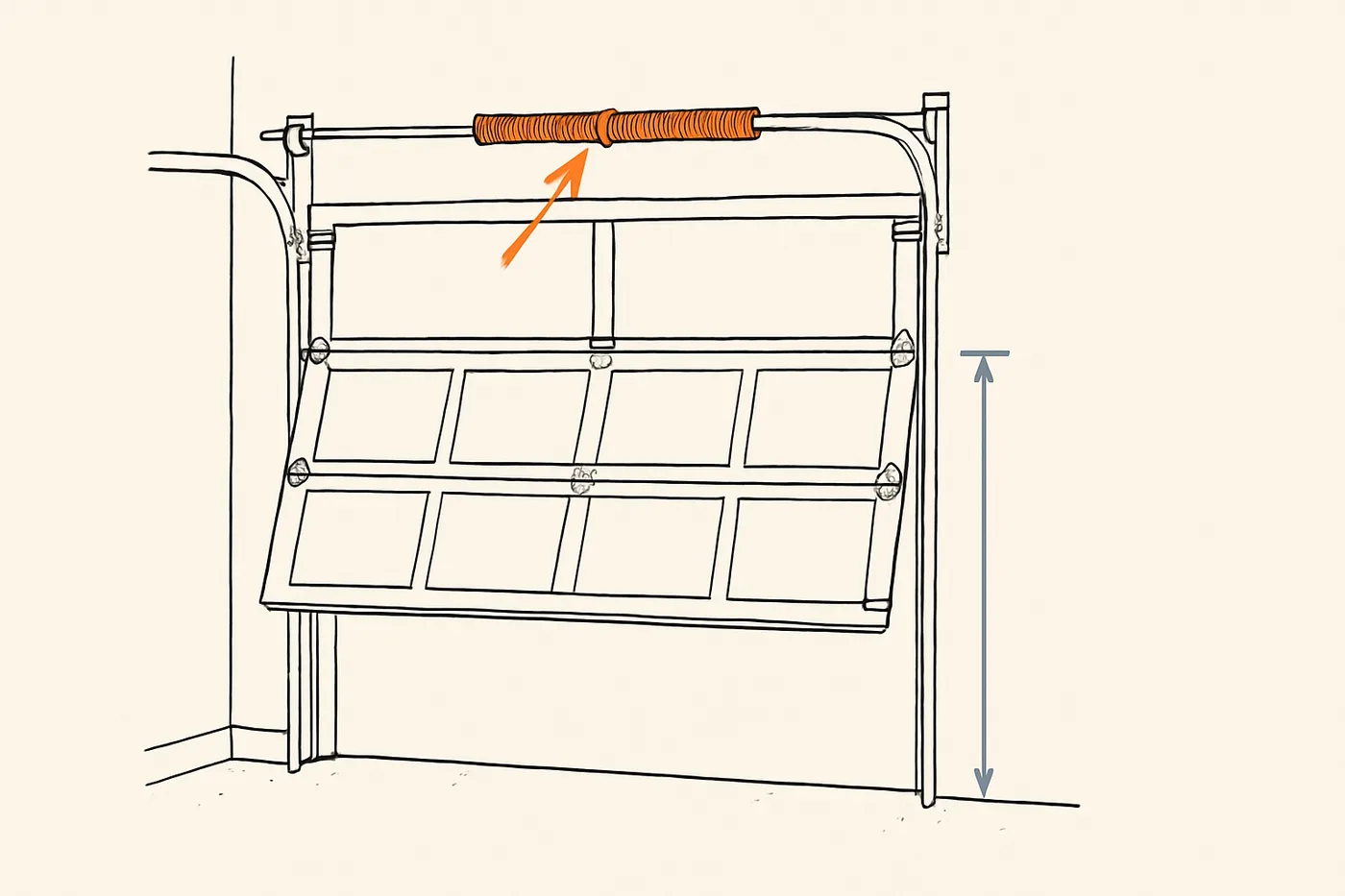
The signs to watch, from the same Clopay spring guide: a gap or separation in the coil of a torsion spring, a door that feels unusually heavy, and uneven movement, where the door looks crooked as it moves or gets stuck partway. If you see any of these, do not wind, adjust or replace the spring. Call a technician.
Cables and bottom brackets
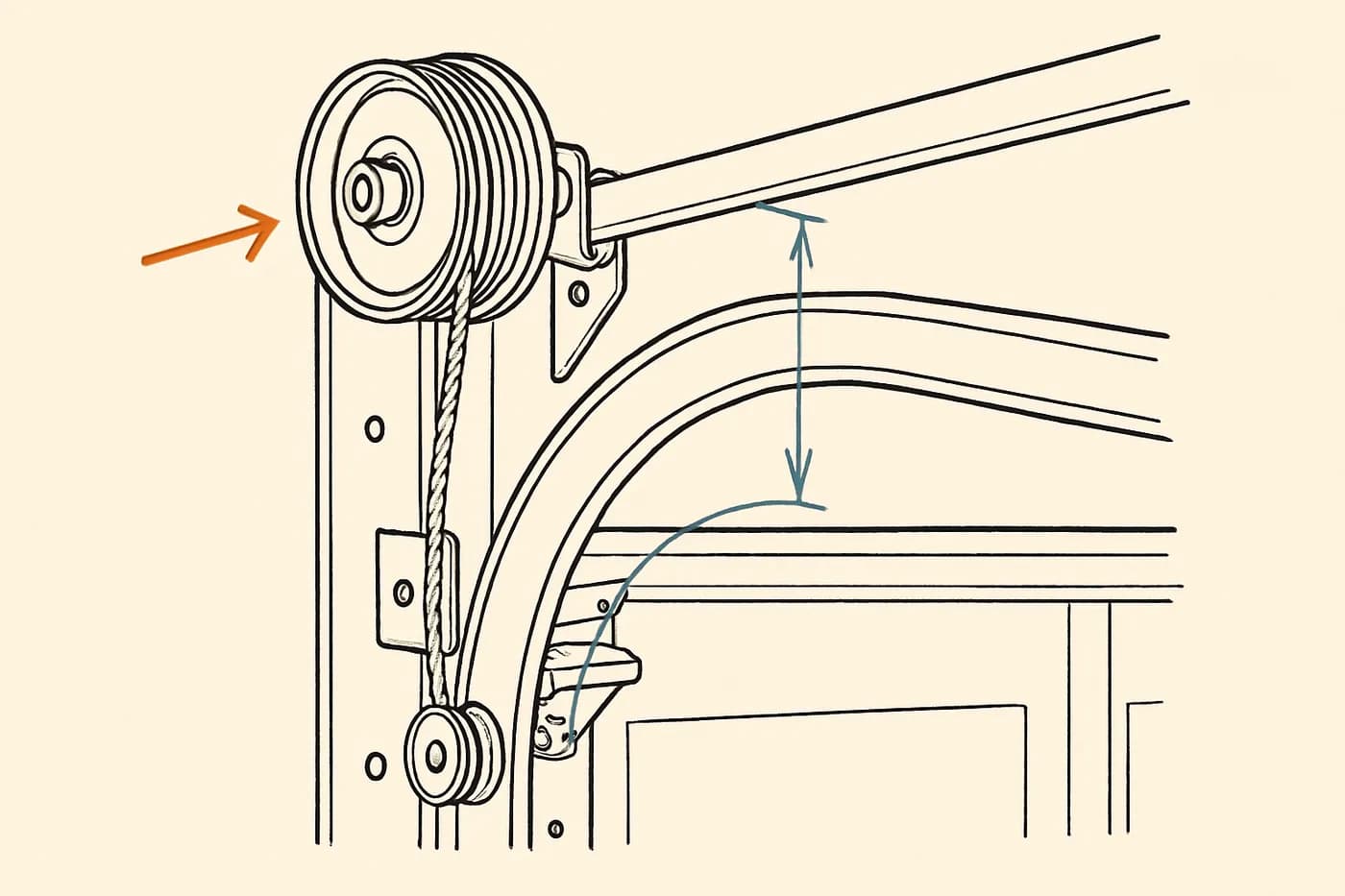
The cables attach the spring system to the bottom brackets on both sides of the door, and DASMA says cables that are frayed or worn "are in danger of breaking, which can cause injury" and should be replaced only by a trained technician.
The bottom brackets hold spring tension too. Clopay says to "contact a professional to replace the cables" and that "the bottom brackets on all garage doors must not be removed while the door is under tension." Look at both; leave both to a technician.
Rollers, hinges and tracks
Clopay's maintenance checklist asks whether the rollers move smoothly and quietly; if not, they may need lubrication or replacement. It says hinges that are bent or broken should be replaced and recommends a garage door maintenance professional for that. For the tracks, it says to clean them with a small brush and wipe them with a damp cloth, and to contact a professional for track repair, because track issues can add stress on your opener. Replacing rollers is a job for a technician too.
What you can do: lubricate the hinge pins and the bearings of steel rollers every 3 to 6 months, closer to 3 for heavy use (Clopay's lubrication guide). Use the type your door maker's manual names, a little at a time, and wipe off the excess. Leave nylon rollers dry, and do not lubricate the tracks. Never lubricate the spring; we leave anything touching the torsion spring to a technician. Our guide on how often to lubricate a garage door has the details.
The opener
Among the opener makers we checked, only Genie gives a general figure. Genie's page on replacing an opener, published June 22, 2022, says most openers last an average of 10 to 15 years. Chamberlain and LiftMaster give none that we could find. The figure usually quoted comes from a 2007 study by the National Association of Home Builders and Bank of America, which lists garage door openers at 10 to 15 years and names Wayne-Dalton as its source (NAHB study). That is a home builders' study, not a maker's figure. Our opener lifespan guide covers what changes that range.
What wears an opener early is a door out of balance. Clopay says a spring that has lost its tension "can put extra stress on your opener and other components, sometimes leading to early failure."
Weather seals
Clopay says most seals need replacing every 2 to 3 years, depending on climate and use, and to look for cracks, hardening or brittleness, or a seal that no longer springs back into shape. Amarr says around two years or more with proper maintenance, and that it is time to replace the seal when the rubber gets very stiff, cracked or begins disintegrating.
Photo eyes
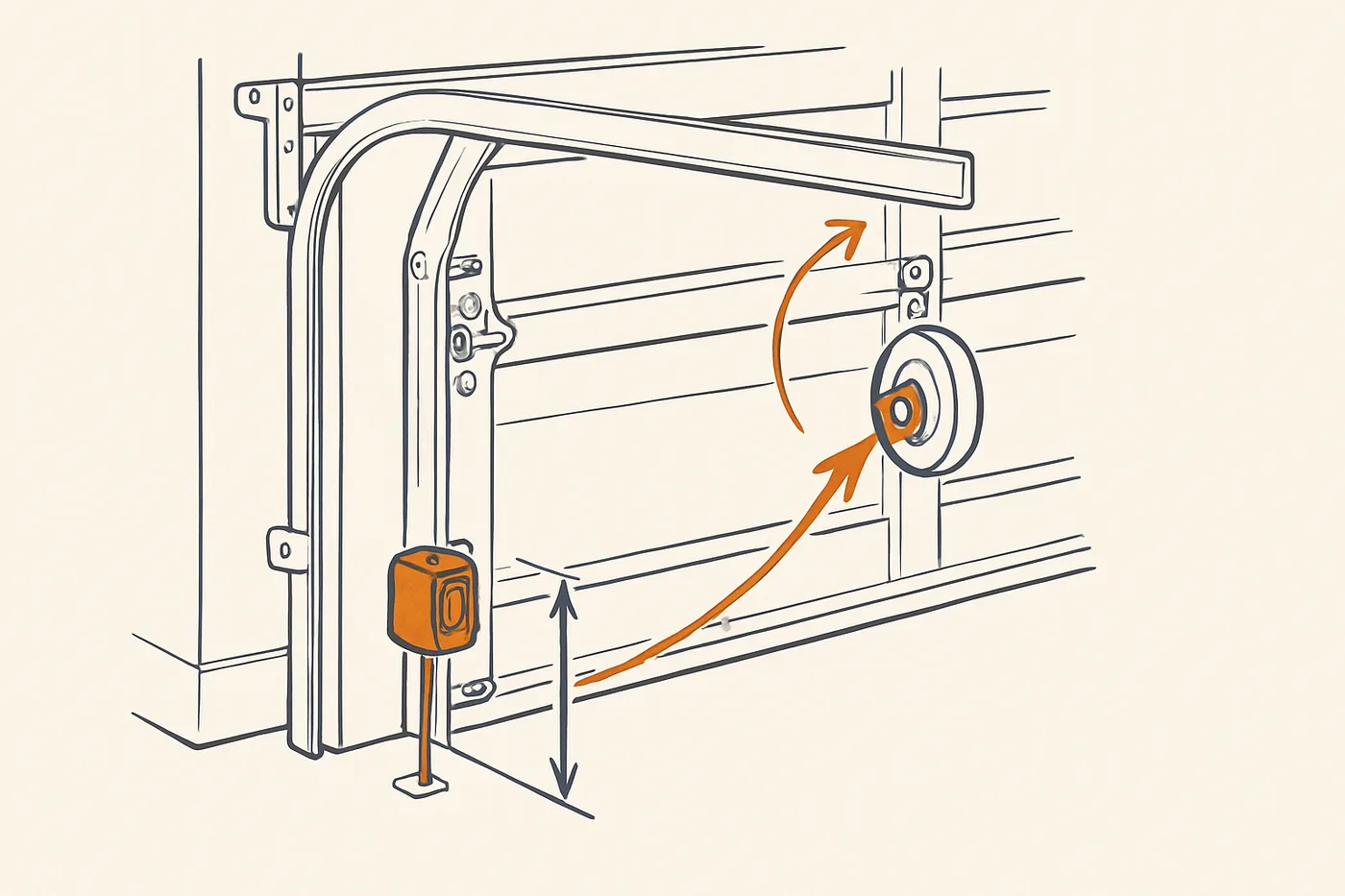
The photo eyes sit on either side of the door, about 6 inches above the floor (Clopay). Clopay says that if they are misaligned or blocked, the door stops before it reaches the floor and reverses open, and the light on the opener blinks. Keeping them working, parallel and clear "is an easy fix that takes less than five minutes." Wipe the lenses, move anything in the beam, and line them up again. Never disconnect them; they are what stops the door closing on someone.
What you can do, and what to leave to a technician
- Look at the springs, cables and bottom brackets from a distance. If anything looks broken, frayed or loose, call a technician.
- Check the balance the way Clopay describes: with the door closed, pull the opener's release, lift the door halfway and let go. A balanced door stays put. If it opens or closes on its own, Clopay says don't attempt to fix the balance yourself and to call a professional.
- Wipe the tracks clean. Never lubricate them.
- Lubricate the hinge pins and steel roller bearings on the schedule above. Leave nylon rollers dry.
- Check the weather seals and the photo eyes.
Our free inspection checklist walks you through each part and emails you a report. If you want a technician to look at the door, A+ Garage Doors (our affiliated installer) and Garage Door Pro Services (our affiliated installer) are two installers we work with.