Aladdin Connect vs MyQ: Which Smart Garage Controller Is Worth Owning
Compare Aladdin Connect and MyQ smart garage controllers. Learn which system offers better compatibility, features, and value for your garage door setup.

The question is usually: which smart garage system will actually do what I want, work with the rest of my house, and not turn into abandonware in three years? The honest answer is that there are only two ecosystems most homeowners will run into — MyQ and Aladdin Connect — and they are not equivalent products. They are different bets on what a smart garage should do.
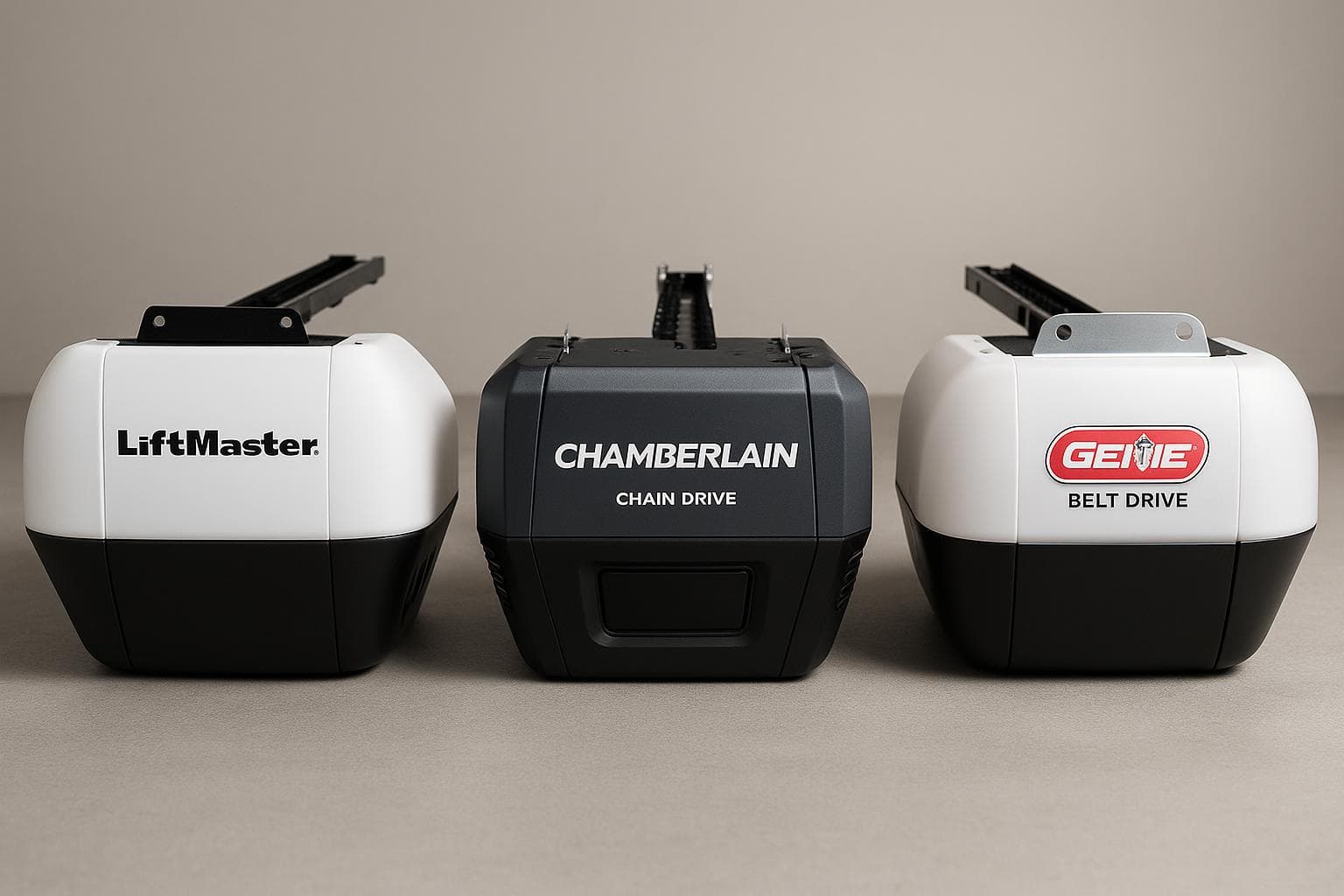
MyQ runs on Chamberlain and LiftMaster openers. Aladdin Connect runs on Genie. Those are the two platforms with national distribution. Ryobi has a third system, but it's tied to Ryobi's opener and tool ecosystem and isn't competing for the same buyer. If you're picking an opener in 2026, you're picking between MyQ and Aladdin — usually because you've already picked the opener brand, and the app comes with it.
That's the first thing to understand. You don't shop for a smart controller. You shop for an opener, and the controller is what shows up on your phone.
MyQ: the default, with caveats
MyQ has the largest installed base of any smart garage platform in the US. If a neighbor has a smart garage, statistically it's MyQ. The app works the same whether the opener is branded LiftMaster or Chamberlain — same parent company, same software, same integrations. On select models it works with Google Home, Amazon Alexa, and Apple Home Key.
What MyQ is good at: remote open and close, scheduling, notifications when the door moves, and shared user access. The hardware is reliable. The app is mature. If something goes wrong, every garage tech in the country has dealt with it before, which matters more than people think. Garage Door Pro services (our affiliated installer) and most regional installers default to LiftMaster, which means MyQ is the system they're best at supporting.
What MyQ is not good at: openness. Chamberlain has spent the last several years narrowing third-party access rather than widening it. They pulled their Amazon Key in-garage delivery integration. Home Assistant and similar local-control platforms have had their MyQ access cut off and restored and cut off again. If you're the kind of homeowner who wants your garage to talk to a non-Chamberlain smart home stack, MyQ has been hostile to that for years and there's no sign it's changing.
The other thing worth saying plainly: CISA — the federal cybersecurity agency — has issued advisories specifically about vulnerabilities in the MyQ platform. That's not a hypothetical concern raised by a blogger. That's the federal government telling you the system has had real holes. Chamberlain has patched the documented ones. But the platform's size makes it a target, and that's the trade-off for buying the dominant ecosystem.
Failure mode: MyQ's integrations can disappear without warning. If your reason for buying a smart opener is to make it talk to a specific third-party service — delivery, insurance, a smart home hub — verify that integration is currently supported before you buy, not after.
Aladdin Connect: the open alternative
Aladdin Connect is Genie's built-in smart platform. It comes standard on Genie's mid-tier and premium openers, including the StealthDrive Connect 7155.
What Aladdin is good at: it kept the integrations MyQ killed. Amazon Key in-garage delivery still works on Aladdin — a driver can open the door, place the package inside, and close it behind them. If that's a feature you want, this is the only mainstream ecosystem that still supports it. Aladdin has been friendlier to third-party tinkering and local-control setups.
The app does the same core things MyQ does: remote control, notifications, scheduling, shared access. It works with Google Home and Alexa. In pure feature terms, it's close enough to MyQ that most homeowners couldn't tell them apart in daily use.
What Aladdin is not good at: ecosystem depth. Aladdin has thinner third-party integrations than MyQ — security systems, smart home hubs, certain insurance and delivery partners have built for MyQ first and Aladdin second, or not at all. The installed base is smaller. The community of techs who know the system inside and out is smaller. If you're in a metro area, that's invisible. If you're rural, it can matter when something breaks.
Failure mode: Aladdin's smaller footprint means fewer people have solved your specific problem before you. Genie support is competent, but a Saturday-night issue is harder to Google your way out of than the same issue on MyQ.
What the smart features actually cost
Smart functionality is not free, and the price you pay depends on whether it's built in or bolted on.
WiFi connectivity adds $50 to $100 to an opener's price when it is built in rather than an add-on accessory. That's the cleanest version. You buy the smart opener once and the radio is integrated. The add-on hubs both companies sell for older openers technically work, but they're a worse experience and cost almost as much.
The bigger cost most people miss: battery backup adds $75 to $150 as an accessory. This matters because California's SB-969 requires battery backup on all new residential opener installations — smart functionality alone does not satisfy that requirement. If you're in California, you're buying battery backup whether you wanted to or not. Some premium openers, like the Genie StealthDrive Connect 7155, include it as standard. Most don't.
Put it all together and a mid-tier belt-drive opener replacement with battery backup and one extra remote totals about $660 installed in 2026 for an attached two-car garage. That's the real number to plan around. The smart features are inside that price, not on top of it. Most mid-tier and all premium openers in 2026 include WiFi as standard, and in homes priced above $500,000 a smart opener with battery backup is now an expected feature rather than a luxury upsell.
For context on the underlying opener choice itself: a belt-drive opener costs $450 to $650 installed and lasts 12 to 15 years, while a chain-drive opener costs $350 to $500 installed and lasts 10 to 15 years. The smart platform is a small piece of a longer decision.
The decision
Buy MyQ if: you've already committed to LiftMaster or Chamberlain hardware for other reasons, you want the deepest bench of third-party integrations that still work today, and you live somewhere with strong installer coverage. For Las Vegas homeowners, A+ Garage Doors (our affiliated installer) handles MyQ installs and service routinely, which is the kind of local support that makes the platform easier to live with. This is the right answer for most buyers who don't have a specific reason to pick the other one.
Buy Aladdin Connect if: you specifically want Amazon Key in-garage delivery, you prefer the Genie hardware on its own merits, or you're committed to a more open smart home stack and have been burned by Chamberlain's integration cuts before. The product is good. It just has fewer friends.
If you don't have a clear reason in either column, buy a mid-tier LiftMaster belt drive with battery backup, accept that you're on MyQ, and get a free garage door safety inspection from our affiliated installer, Garage Door Pro Services done on the door itself before installation. The opener is only as good as the door it's lifting, and the smart app is the least interesting part of either decision.