How to find a garage door service that won't waste your morning
Find reliable garage door repair and maintenance services in your area. Learn what to expect from professional garage door technicians and how to choose a trusted local provider.

You typed "garage door service near me" into your phone because the door won't close, or it's making a sound you've never heard before, or it's been ten years and you finally got around to it. Now you're looking at a results page with twelve companies, half of them claiming to be the cheapest and the other half claiming to be the most trusted, and you have no way to tell which will show up and do honest work.
This article is about how to read those results. Not the marketing, the signals underneath them.
What a good service call actually includes
HomeAdvisor's garage-door-repair page, a home-services cost guide, lists a quick visit at $50 to $75, with labor at $75 to $150 an hour (updated June 2026). That gives you a baseline. Ask the company what its service-call fee is, whether it is applied toward a repair you authorize, and what it covers, and be wary of a price that is far from the baseline in either direction without an explanation.
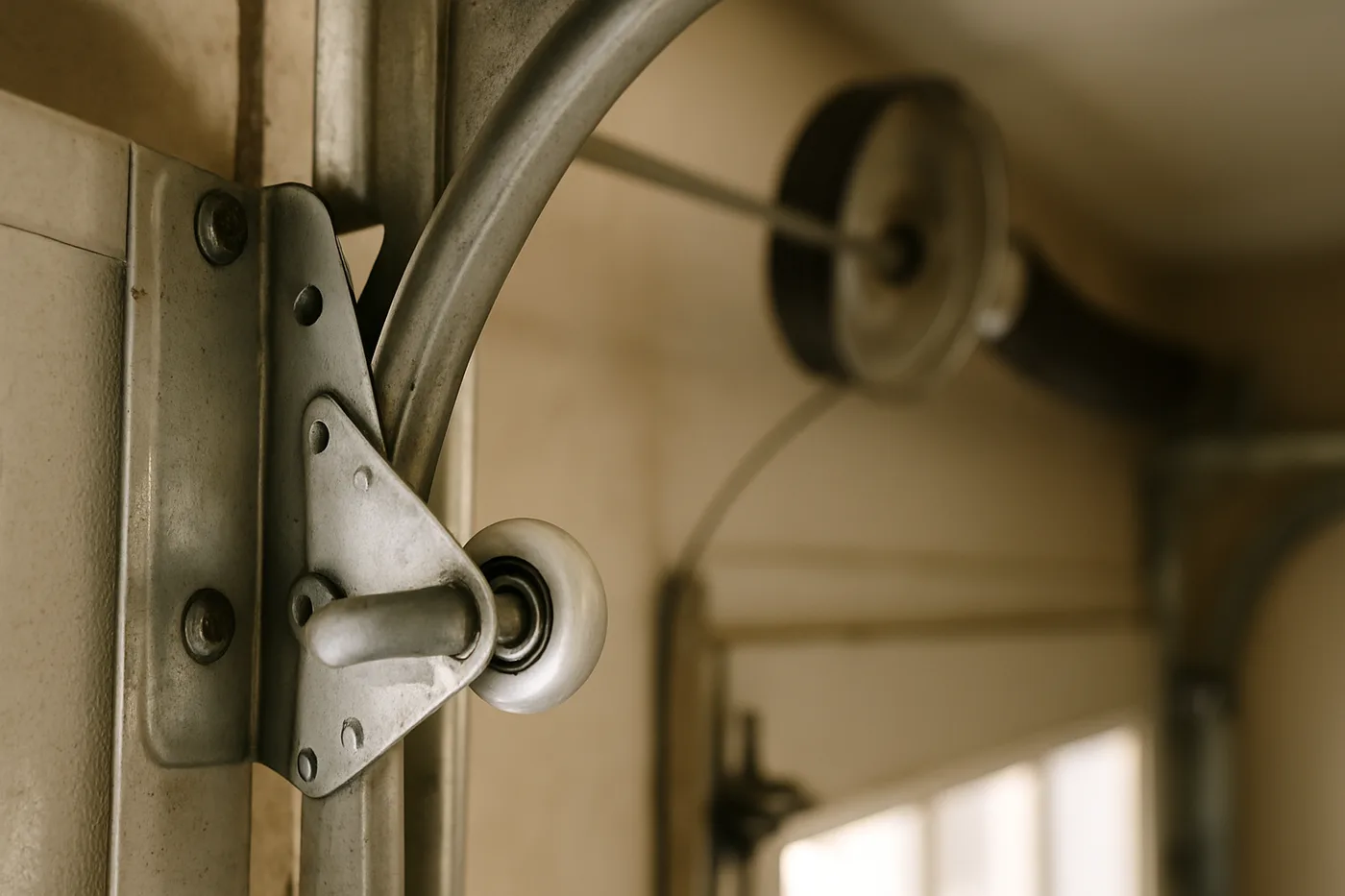
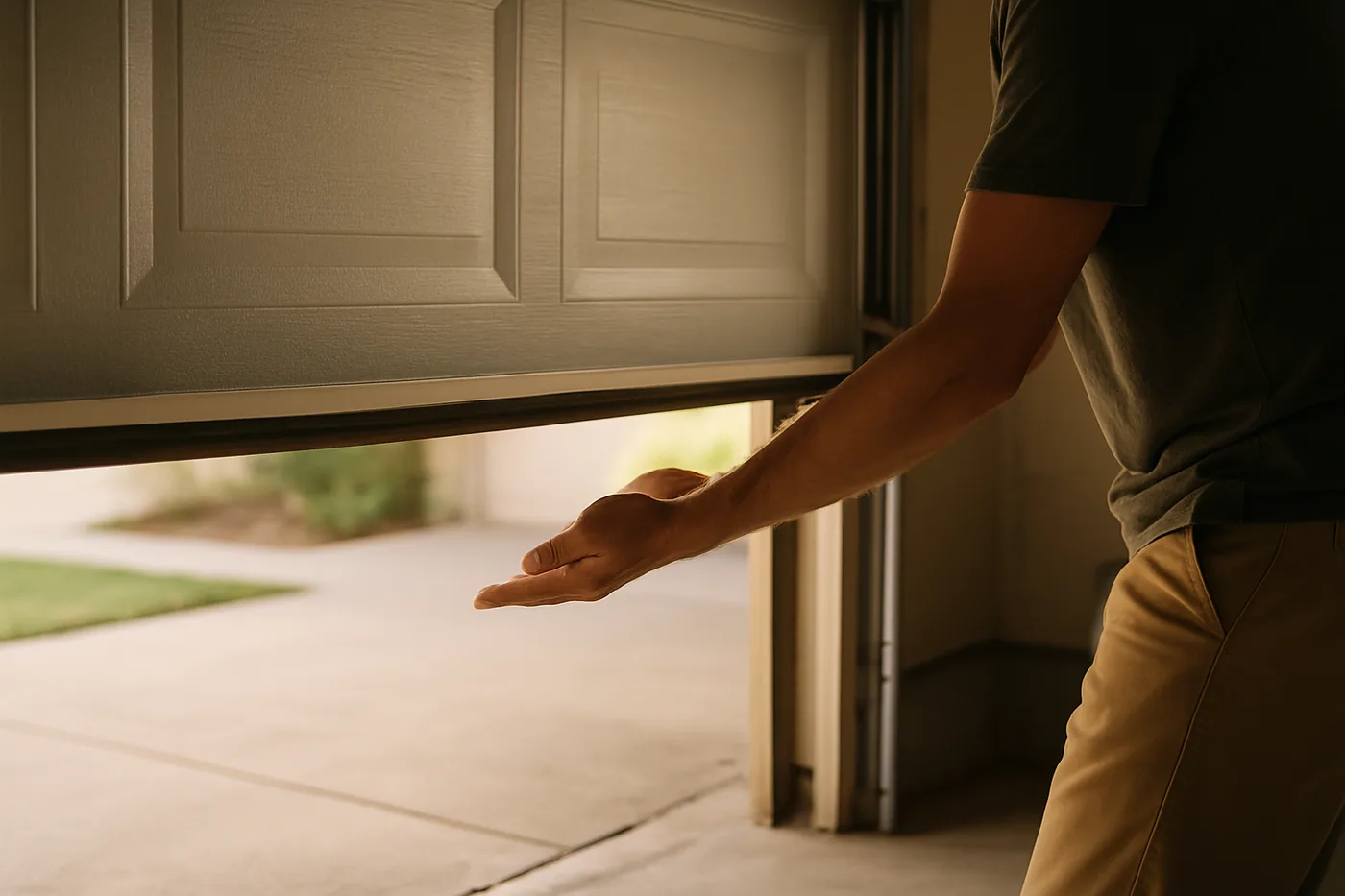
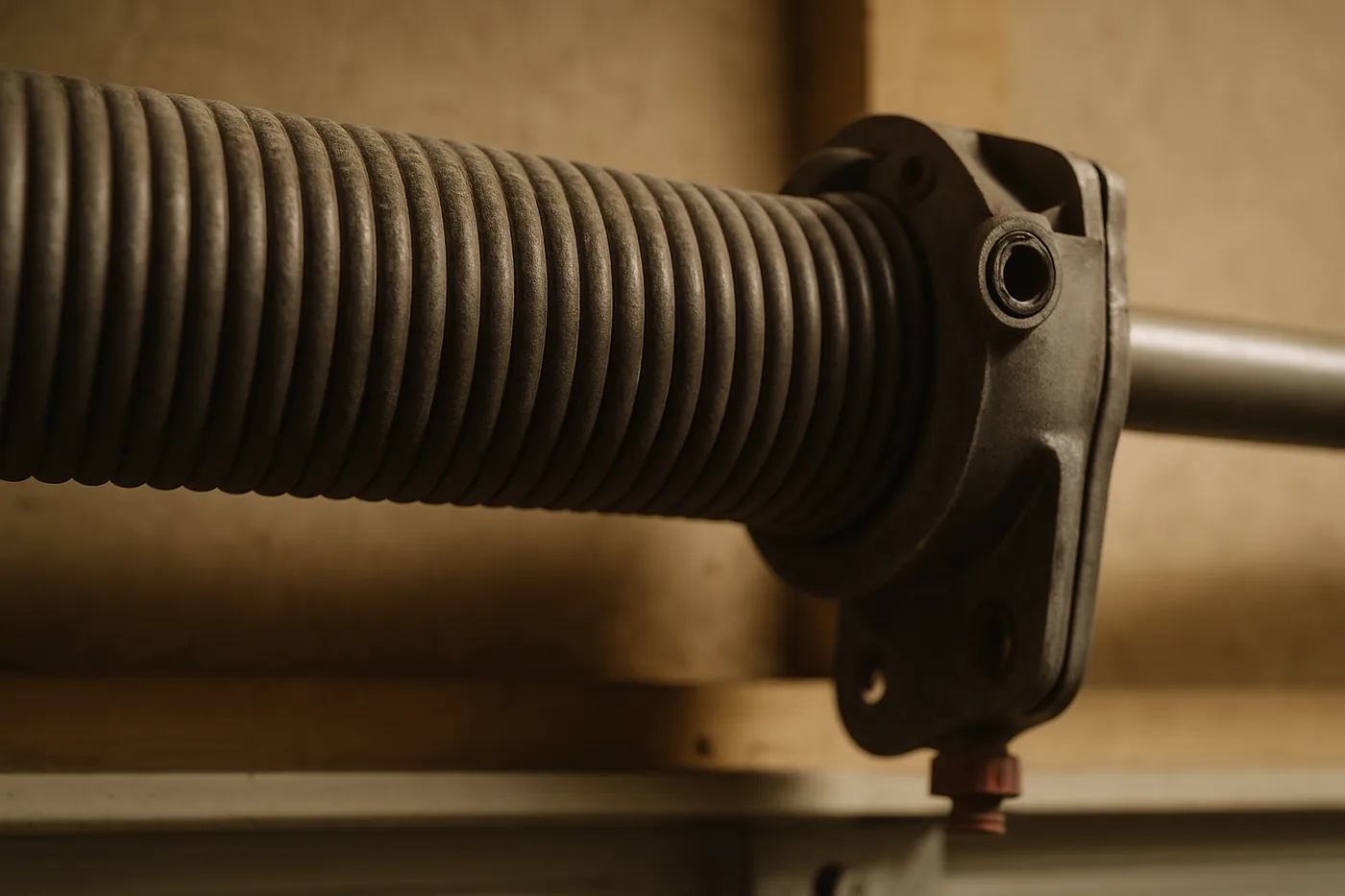
When the technician arrives, you should see them do a few specific things before they quote you anything. They should disconnect the opener and lift the door by hand to check the balance. They should look at the springs (both of them, if you have two) and check for gaps in the coils or rust at the cones. They should run their hands along the cables, looking for fraying. They should test the photo-eye sensors and watch the door cycle once, end to end, listening.
If the technician walks in, glances at the door, and immediately tells you what's wrong, that's not expertise. That's a script. A real diagnosis takes more than a glance because a garage door is a system, and the part that broke is not always the part that caused the problem.
The prices that should be in your head before they quote you
HomeAdvisor's garage-door-repair page lists a spring repair at $180 to $350, depending on the spring and the region. If your quote is far from that, ask what's in the number: there may be a real answer, such as a heavier spring, an emergency visit or extra parts, or there may not.
Openers are the other place where quotes vary. On HomeAdvisor's opener-installation page, unit prices run $150 to $250 for chain, $160 to $350 for belt, $150 to $300 for screw and $280 to $500 for direct drive, and installer labor is $60 to $80 an hour for a job that takes two to six hours. Those are separate lines, so ask what is in your installed number: a new rail, wiring or a wall-mount conversion may be a real answer.
Weather seal work is the small-dollar version of the same question. Ask for the seal and the labor as separate lines, and what the seal is made of.
What a technician should be looking at, even when you didn't ask
This is the test I use to separate the good companies from the rest. When you call for one thing, does the technician notice the other things?
A door's balance is the single most diagnostic check there is. An out-of-balance door forces the opener to compensate, wearing the spring, the opener and the cables faster. A technician who replaces your spring and doesn't check the balance afterward has done half a job. A technician who replaces your opener gears and doesn't notice that the door is dragging the new gears toward the same failure has done less than that.
The same logic applies to cycle counts. A standard spring is rated for about 10,000 cycles, and one cycle is one full open and close, which at four cycles a day is about seven years (IDC Spring, a spring manufacturer). If your door's spring hasn't been touched in years, a good technician will tell you it's worth planning for even if it isn't the reason they came out. They can also tell you about springs with a higher cycle rating, and what they cost, and let you decide. That's not an upsell. That's information.
Why this work belongs with a professional
There is a category of garage door repair that homeowners can do, tightening hinge bolts, replacing a photo-eye, swapping a bottom seal, vacuuming the tracks. There is another category where the line is bright and you do not cross it.
The cables that hold that weight are under tension every time the door is down.
This is the work that belongs with a technician. Not because the steps are complicated. Because the failure mode is permanent.
The auto-reverse system exists because the industry already knew what this equipment can do to a person. Ask the company whether it carries insurance for this work. You don't.
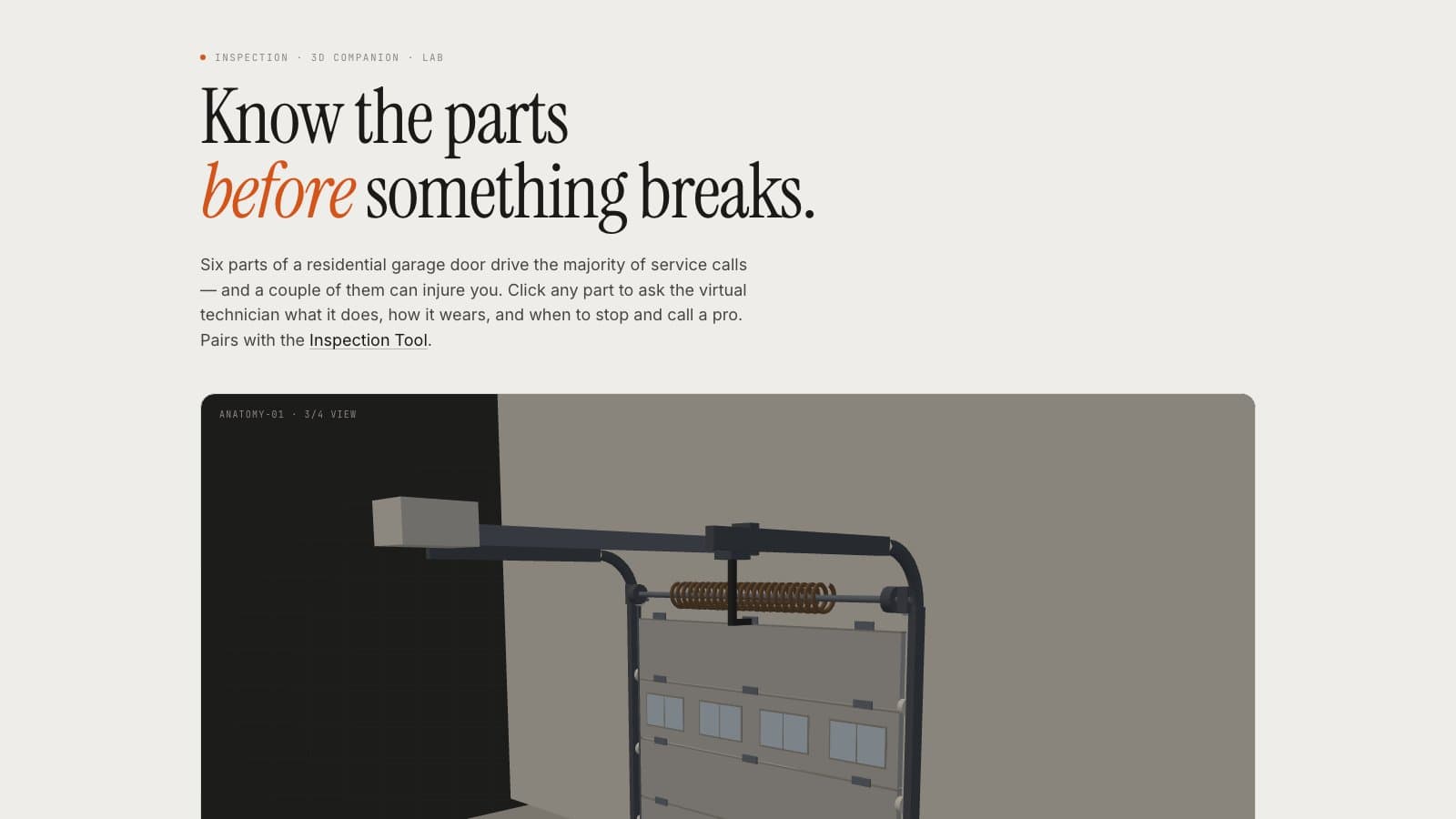
If you want to understand what the technician is doing while they're at your house, the anatomy lab walks through the system piece by piece, and Maya's tech-decoded video covers the language they'll use so you can ask better questions.
How to choose between three companies that all look the same
Start with how they answer the phone. A company that asks you a few diagnostic questions (what sound is the door making, when did it start, has anything changed) is doing triage, which is what you want. A company that just asks for your address and credit card is doing dispatch.
Read reviews for the words that repeat. "Honest" and "showed up when they said" and "explained what was wrong" are the words you want. "Pressured me" and "tried to sell me a new opener" are the words you don't. A few of each is normal. A pattern is a pattern.
Ask if they'll quote the repair before they start work, in writing, with parts listed. Anyone who won't is asking you to sign a check with no amount on it.
Ask how long the company has been in your area. A company that has worked in your zip code for years has serviced doors at every stage of their life, and it will have local references you can call.
And one small thing: ask what they use to lubricate the rollers and hinges, and why. The door and opener makers name the lubricant they specify, and a technician should be able to tell you what that is for your door. An answer of "whatever's on the truck" is worth a follow-up question.
A good local company will save you money over a decade because the work they do today doesn't create the next problem. A bad one will be cheaper this morning and more expensive every morning after that.
If you're in the Las Vegas area, A+ Garage Doors (our affiliated installer) is a local option; use the questions above on any quote. For homeowners in other regions, Garage Door Pro Services (our affiliated installer) offers a free safety inspection.