Garage Doors: A Homeowner's Buying and Maintenance Hub
Complete garage door buying guide and maintenance tips for homeowners. Learn how to choose, install, and care for your garage door system.

Most homeowners think about their garage door twice: the day they buy the house, and the day it stops working. That's the wrong cadence. A garage door is the largest moving object in your home, it opens more than a thousand times a year, and the difference between a good buying decision and a bad one shows up every morning for the next fifteen years.
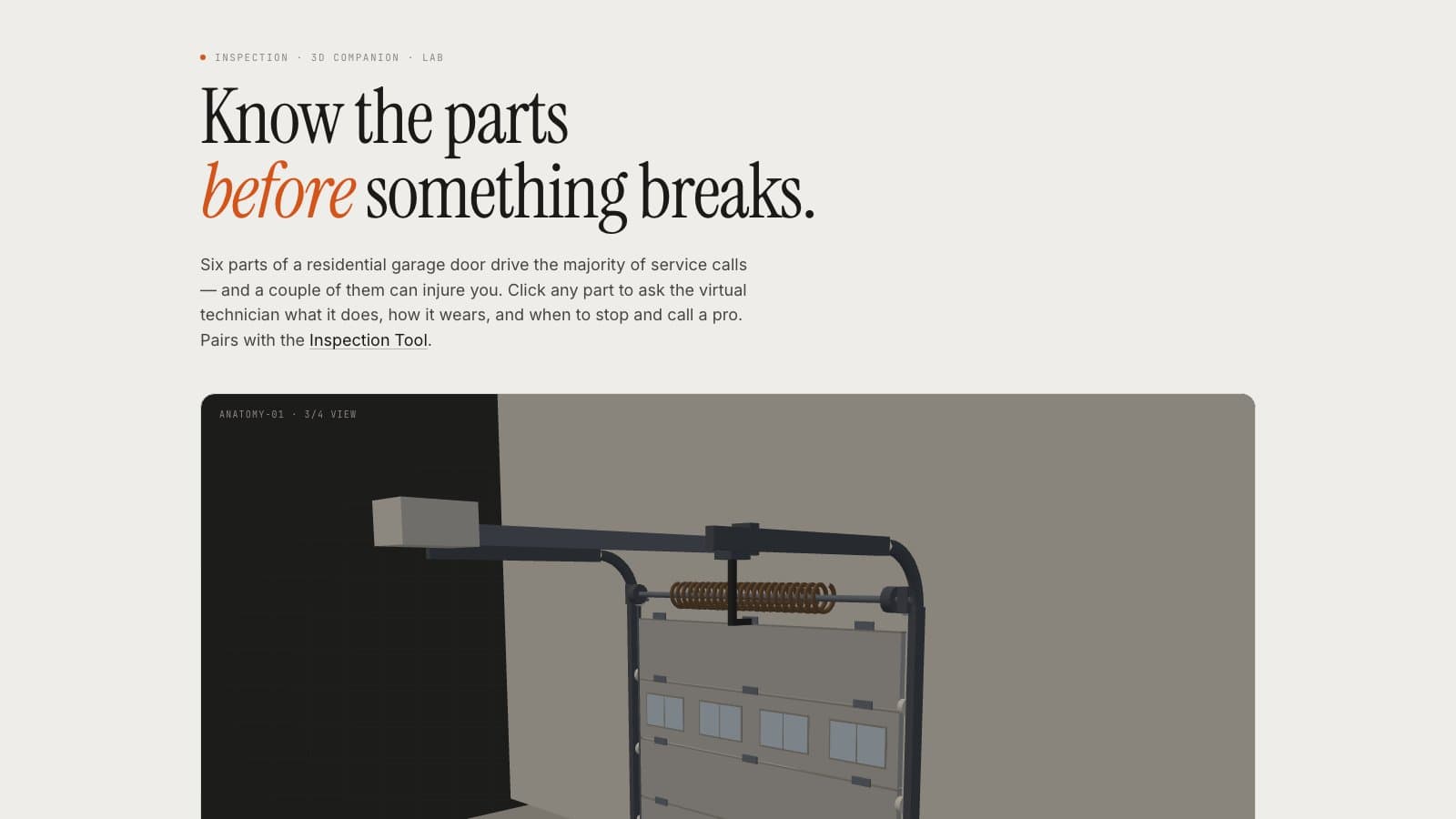
This guide is the short version of what you need to know before you spend money — on the door, on the opener, or on the spring replacement you've been putting off. If you want the deep mechanics behind any of it, the science of garage doors lab and the anatomy walkthrough cover the physics and the parts in detail.
The door itself: three real choices
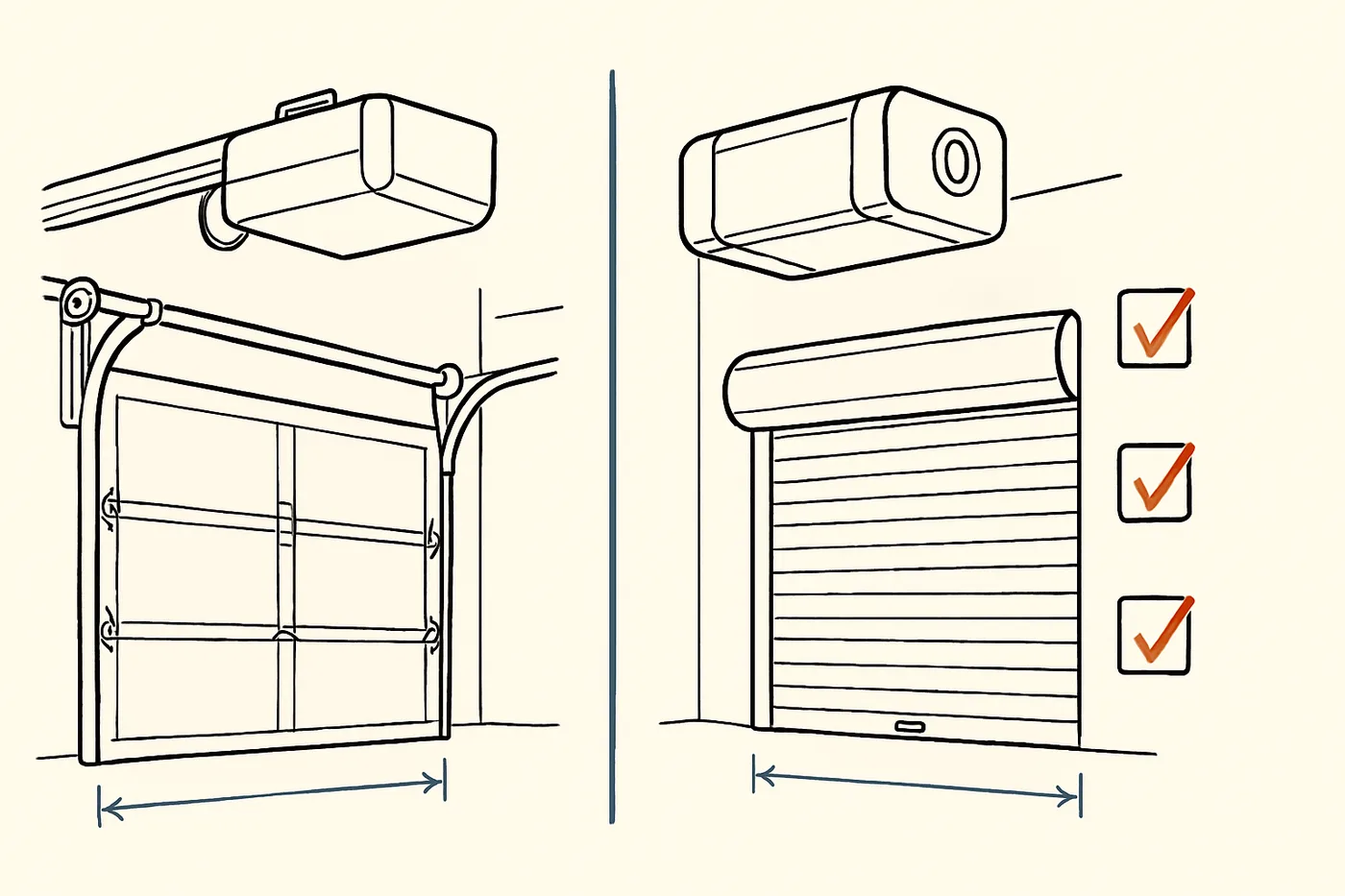
For a residential home, you have three doors worth comparing seriously. Everything else is a variant of one of these.
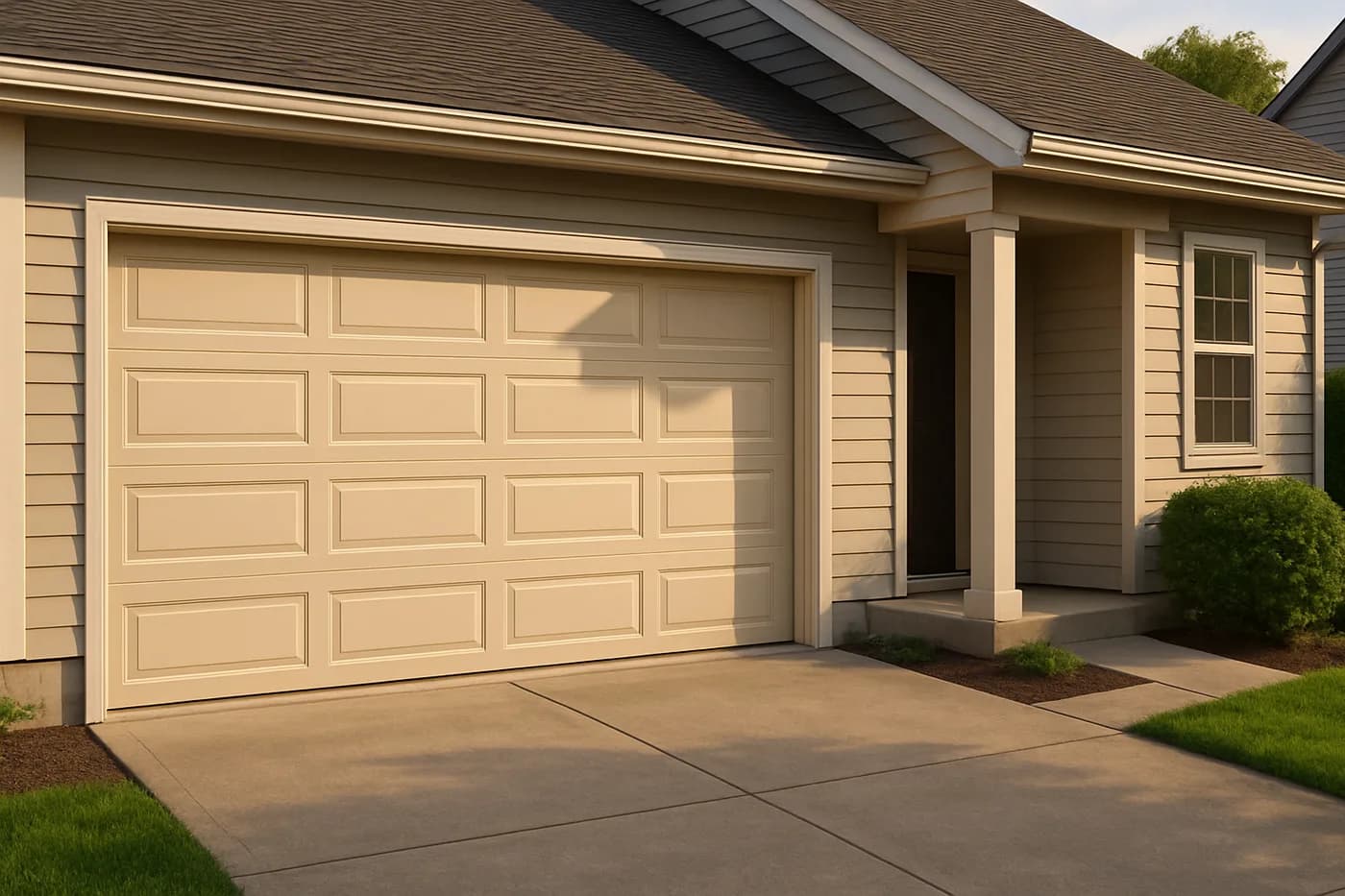
Insulated steel sectional is the default answer for most homeowners, and it's the default for good reasons. A mid-grade insulated steel door with a belt-drive opener, professionally installed, runs $1,950 to $3,900 in 2026 for a standard 16x7 double-car opening. It's quiet, it insulates, it doesn't rot, and it's rated for the cycle count a normal household will put on it. The Amarr Olympus is a good benchmark in this category — a three-layer polyurethane sandwich door that reaches up to R-18 and costs $1,700 to $2,900 installed for that same standard opening.
Custom wood is the door you buy when the house calls for it. It runs $4,000 to $15,000 installed depending on species and hardware, and it needs refinishing every three to five years. That refinishing schedule is not optional. Skip it once and you're looking at a door that will warp or delaminate in the sun. Buy this if the architecture demands it and the maintenance schedule doesn't bother you. Don't buy it for the look alone.
Rolling steel is a workshop and light-commercial door that occasionally shows up on residential detached garages. It's not a competitor to sectional for most homes, but the trade-offs are worth knowing. Rolling steel is rated for 25,000 to 500,000-plus cycles compared to 10,000 to 50,000 for sectional, so it lasts longer under heavy use. But sectional maxes out at R-18 with polyurethane injection, while rolling steel maxes out at R-10 with foam-filled slats. The insulation gap is real. Rolling steel also offers something sectional cannot: it can be fire-rated for up to 4 hours with fusible links that melt at approximately 165°F to allow gravity-closure. If you have an attached workshop with a kiln or a welding setup, that matters.
The opener: three real choices, one obvious answer for most
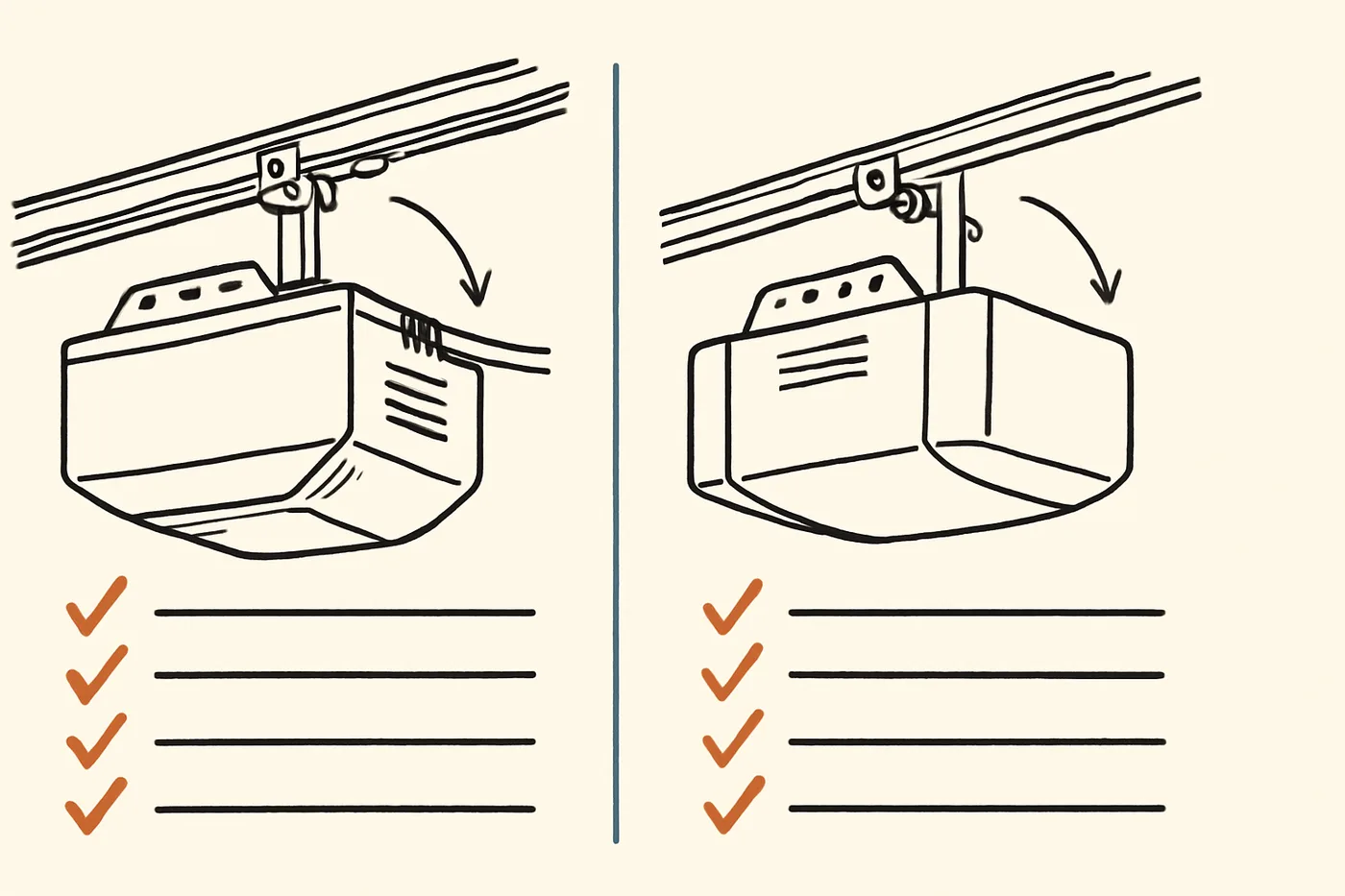
Chain drive is the cheap, loud, durable option. It costs $350 to $500 installed and lasts 10 to 15 years with basic maintenance. Fine for detached garages. Miserable in an attached one, because it operates at 70-plus decibels — loud enough to wake anyone sleeping above the garage.
Belt drive is the right answer for most homeowners with an attached garage. It operates at roughly 50 dB versus a chain drive's 70-plus dB, which is the difference between audible and nearly inaudible operation with bedrooms above. If your door has gotten louder over time, the garage door noise diagnostic video walks through what's actually causing it before you assume the opener is the problem.
Direct drive is the long-hold option. It costs $650 to $900 or more installed, lasts 20 years or more with minimal maintenance, and most units carry a lifetime warranty on the motor. If you're going to be in the house for two decades, the math works.
One sizing note that catches people: for a double-car door, a solid wood door, or an insulated steel door over 16 feet wide, three-quarter horsepower is the minimum to avoid premature motor burnout. Half-horsepower on a heavy double door will work for a while, and then it won't.
Springs, smart features, and the things nobody tells you
Springs are the single most important part of the door and the one homeowners understand least. Standard torsion springs are rated to 10,000 cycles — roughly seven years at four cycles a day — while high-cycle springs rated to 25,000 to 100,000 cycles cost $75 to $150 more upfront and last proportionally longer. When you're already paying a pro to replace springs, the upgrade is nearly always worth it. You are not saving money by buying the same standard spring three times over the life of the door.
On smart features: built-in WiFi adds $50 to $100 to an opener's price, and most mid-tier and all premium openers in 2026 include it as standard. It's not an upsell anymore — it's a checkbox. What is still a real decision is which platform. CISA — the federal Cybersecurity and Infrastructure Security Agency — has issued advisories specifically about vulnerabilities in the MyQ platform used by Chamberlain and LiftMaster, making Aladdin Connect a notable alternative for security-conscious buyers. If you plan to use the app, this matters. If you're only planning to use the wall button and remotes, it doesn't. Maya's video on smart opener tech is the fastest way to figure out which category you're in.
Battery backup is the last one. It adds $75 to $150 to the opener cost and has been legally required on all new residential opener installations in California under SB-969 since July 1, 2019. Outside California, it's optional. If you lose power more than a couple times a year and your garage is your primary way in and out of the house, it's worth the money.
Maintenance: the short list
Twice a year, look at the door and listen to it. If the springs sound different, look different, or the door bounces on the way down, get a pro out before it fails. Local techs like A+ Garage Doors (our affiliated installer) handle installation and service across a wide range of door and opener types, and for Las Vegas homeowners they offer garage door repair in Las Vegas with same-day response on spring and cable failures. If you'd rather have someone catch problems before they become emergencies, Garage Door Pro services (our affiliated installer) include a free garage door safety inspection that covers the parts homeowners can't see from the ground.
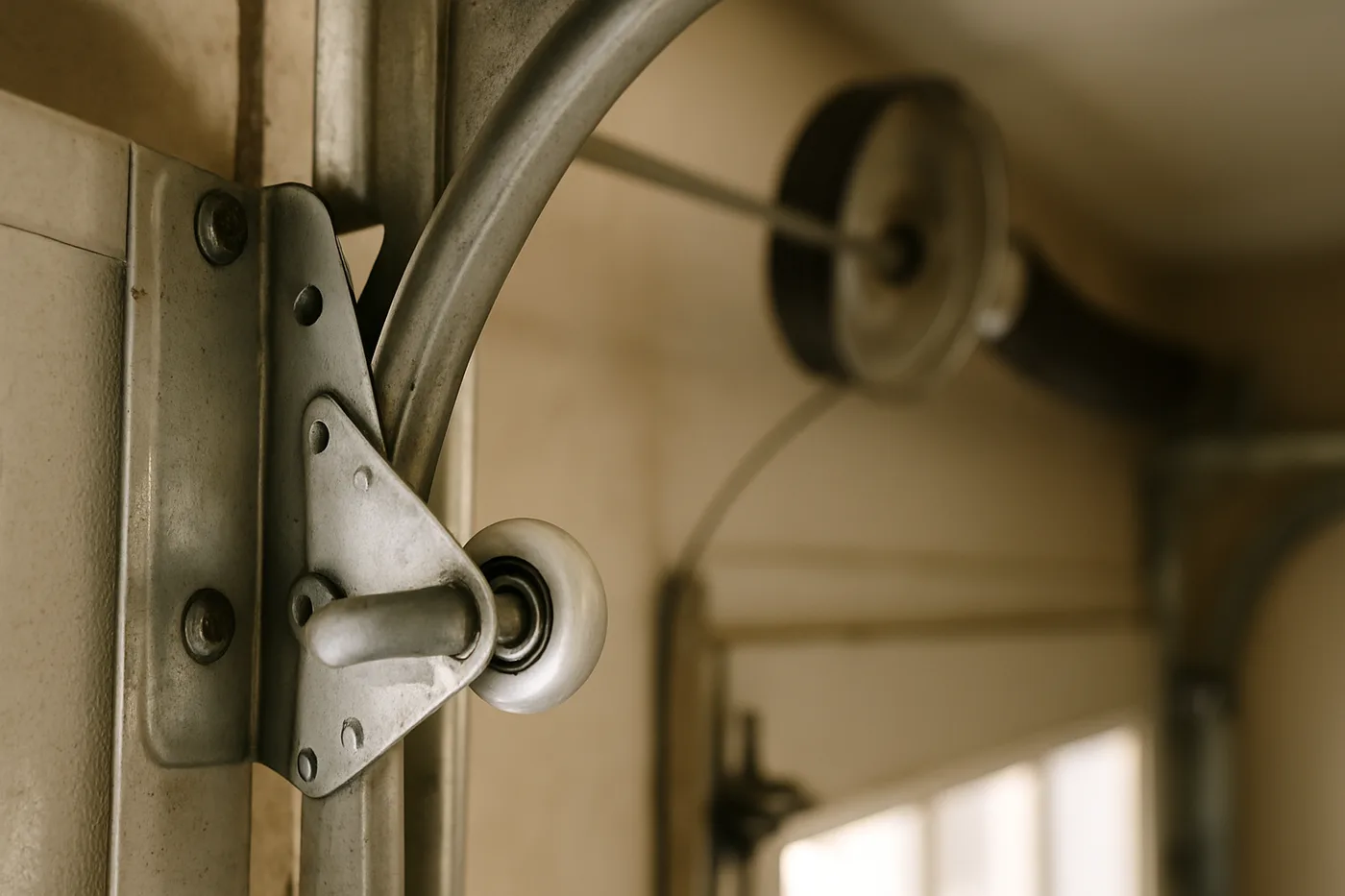
Lubricate the hinges and rollers with a garage door specific lubricant every six months. Never grease the track itself. If you want to see how the whole system moves in slow motion, the pop art physics video is the clearest visualization of what your door is doing every time it opens.
The decision framework
One: is the garage attached or detached? Detached, no living space nearby — chain drive opener, standard steel sectional door, standard-cycle springs. Save the money. Attached with living space adjacent or above — belt drive minimum, insulated steel sectional, and seriously consider high-cycle springs.
Two: how long do you plan to stay in the house? Under seven years, buy the standard mid-grade package and don't over-invest. Seven to fifteen years, the high-cycle spring upgrade and belt drive both pay back. Fifteen years or more, price out direct drive and R-18 insulation, because you are going to live with this decision every day of that time.
Three: does your garage have a specific constraint — a workshop with fire risk, a heavy custom wood door, a state-mandated battery backup requirement, or a security concern about the smart app? If yes, that constraint drives one specific decision above and the rest of the package stays standard.
For the middle-of-the-road homeowner with an attached garage and a plan to stay ten years: insulated steel sectional door in the $2,000 to $3,000 installed range, three-quarter horsepower belt drive opener with battery backup, high-cycle torsion springs. That's the answer.