The torsion shaft assembly: what it is, what it does, and where the danger lives
Learn how garage door torsion shaft assemblies work, including components, function, and safety considerations for homeowners.

A fully wound residential torsion spring stores around 236 ft-lb of energy at the moment the door is closed. That energy is held in place by a steel shaft, two cast aluminum drums, two cones, and a set bolt assembly that most homeowners have never looked at directly. The torsion shaft assembly is the structure that captures that energy when the door descends and releases it back into lifting force when the door rises. When it works, it is invisible. When it fails, the failure is mechanical, sudden, and physical.
This article explains what each component of that assembly does, how they interact, and where the line falls between what you can inspect and what you cannot touch.
What sits above the door
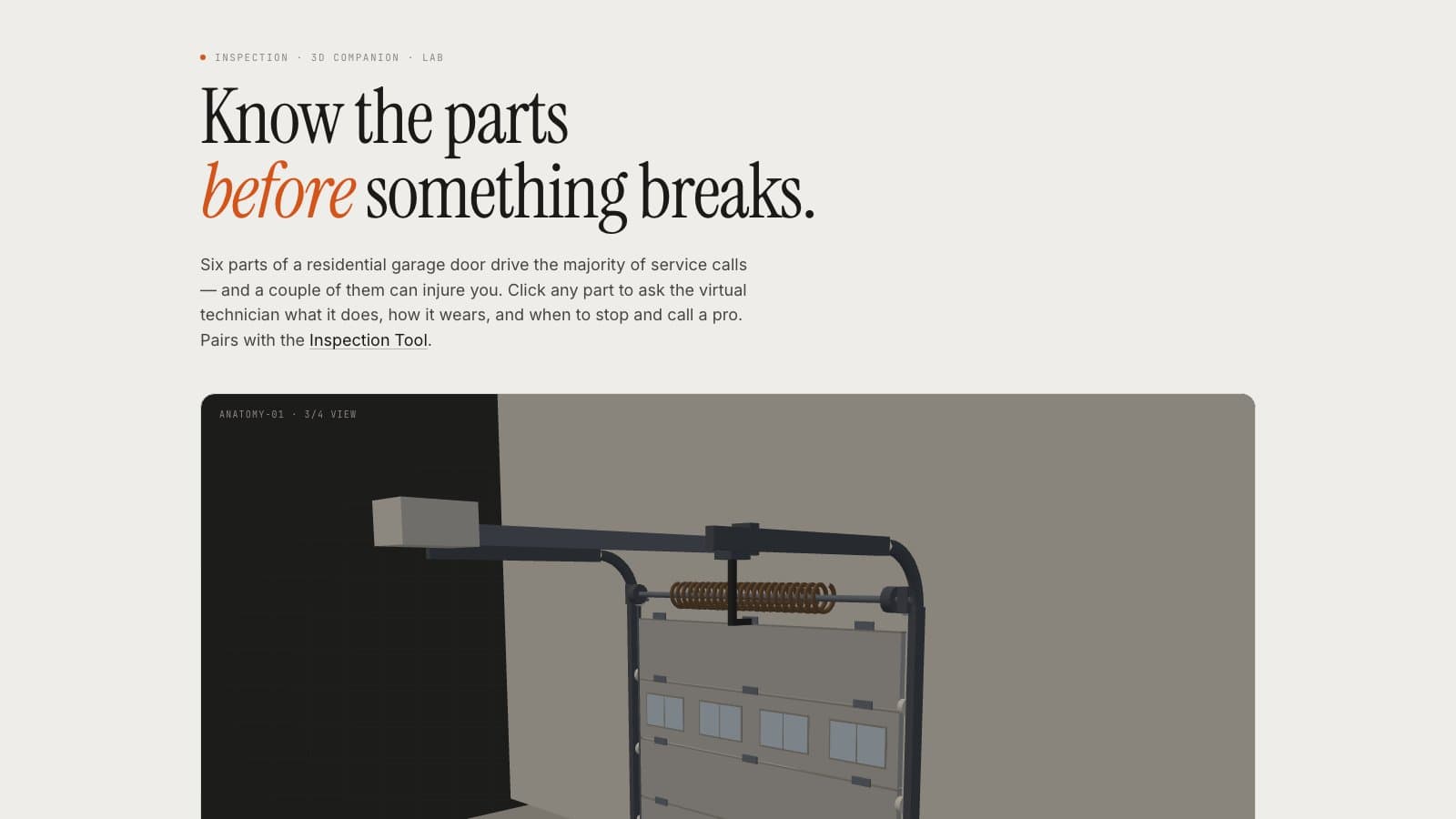
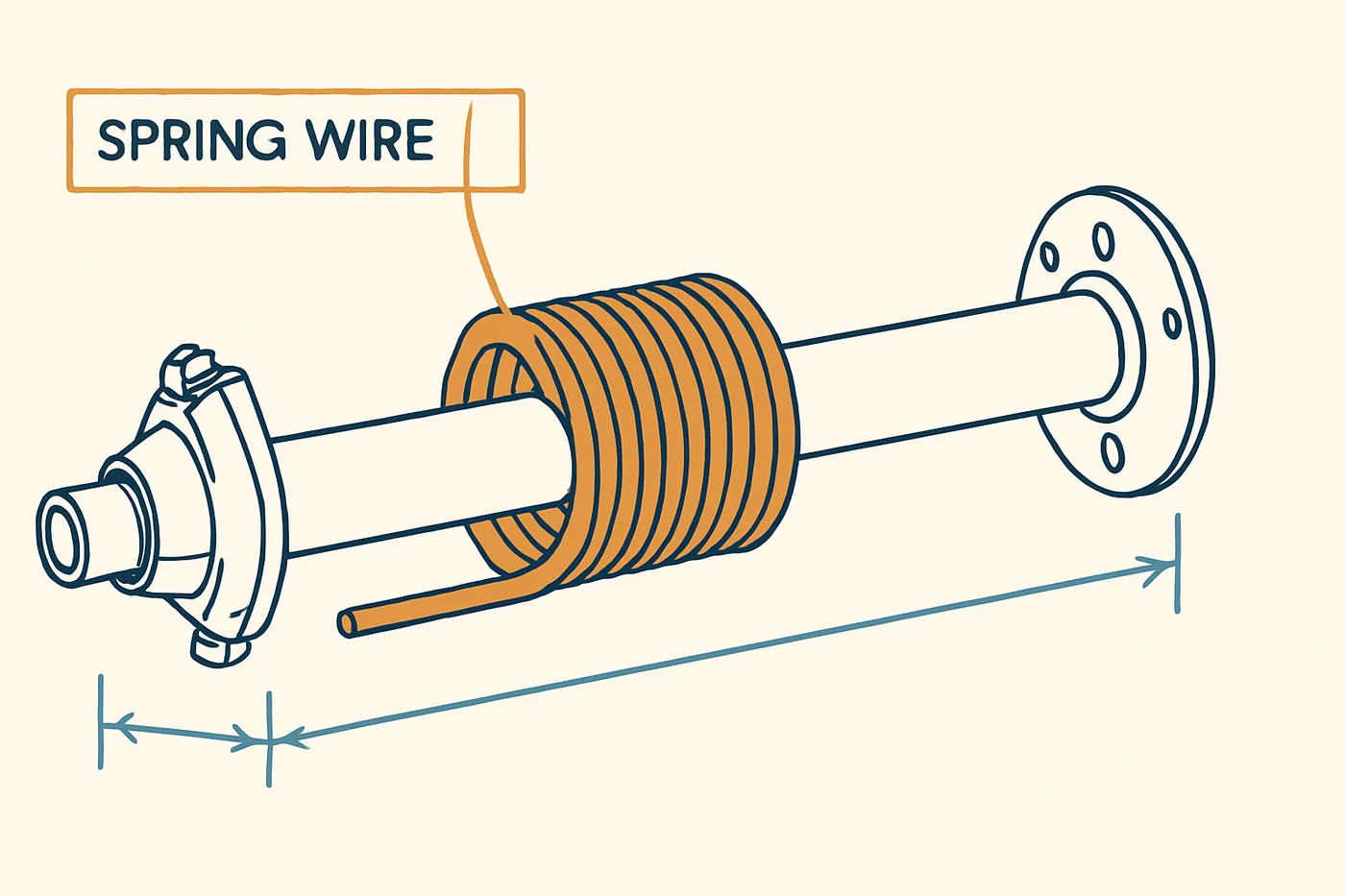
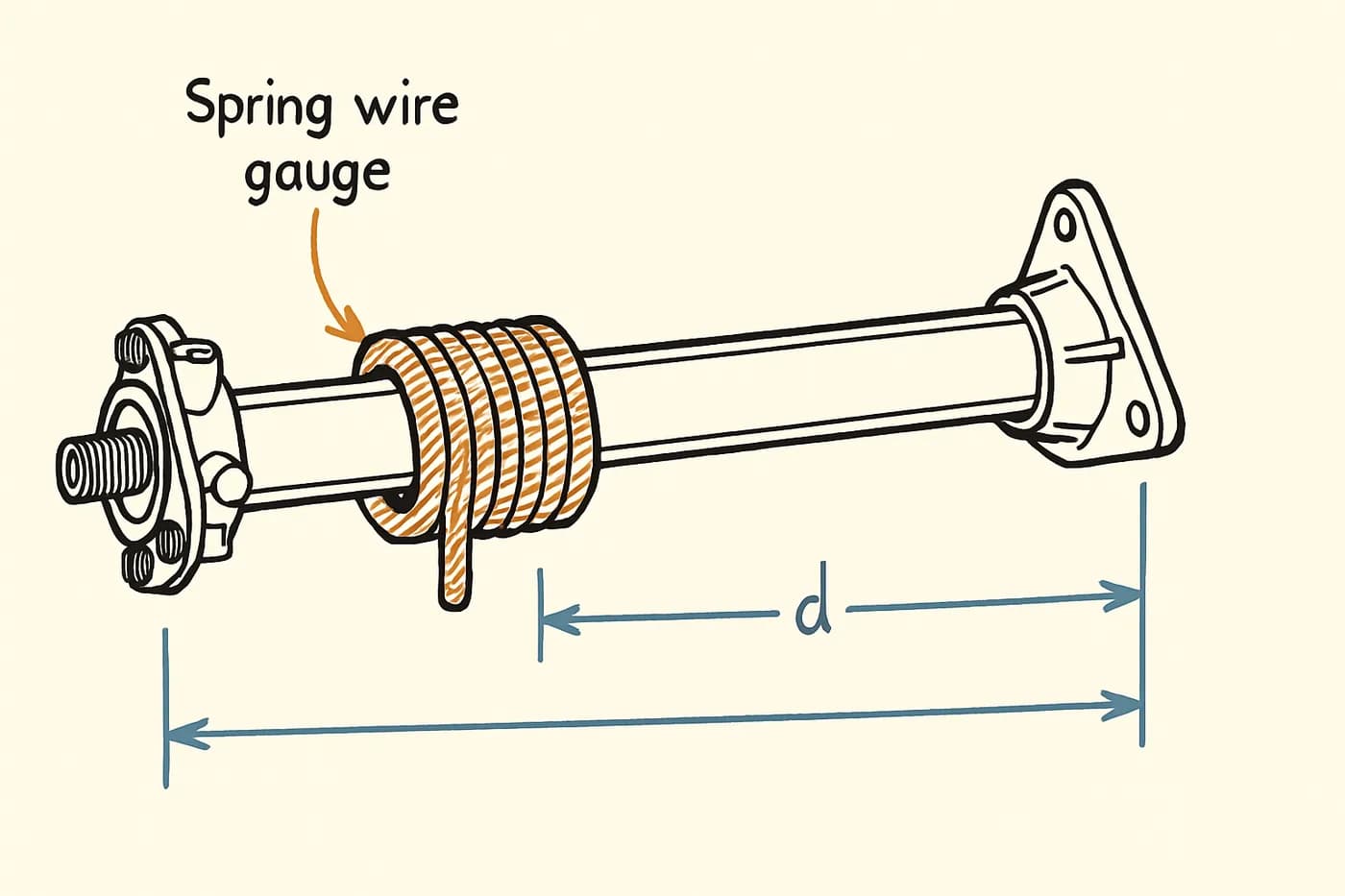
The torsion shaft assembly runs horizontally along the wall above the door opening. From the center of the header outward to each end, the assembly consists of:
- A steel shaft, typically one inch in diameter, supported by bearing plates at each end and one center bearing plate behind the spring or springs.
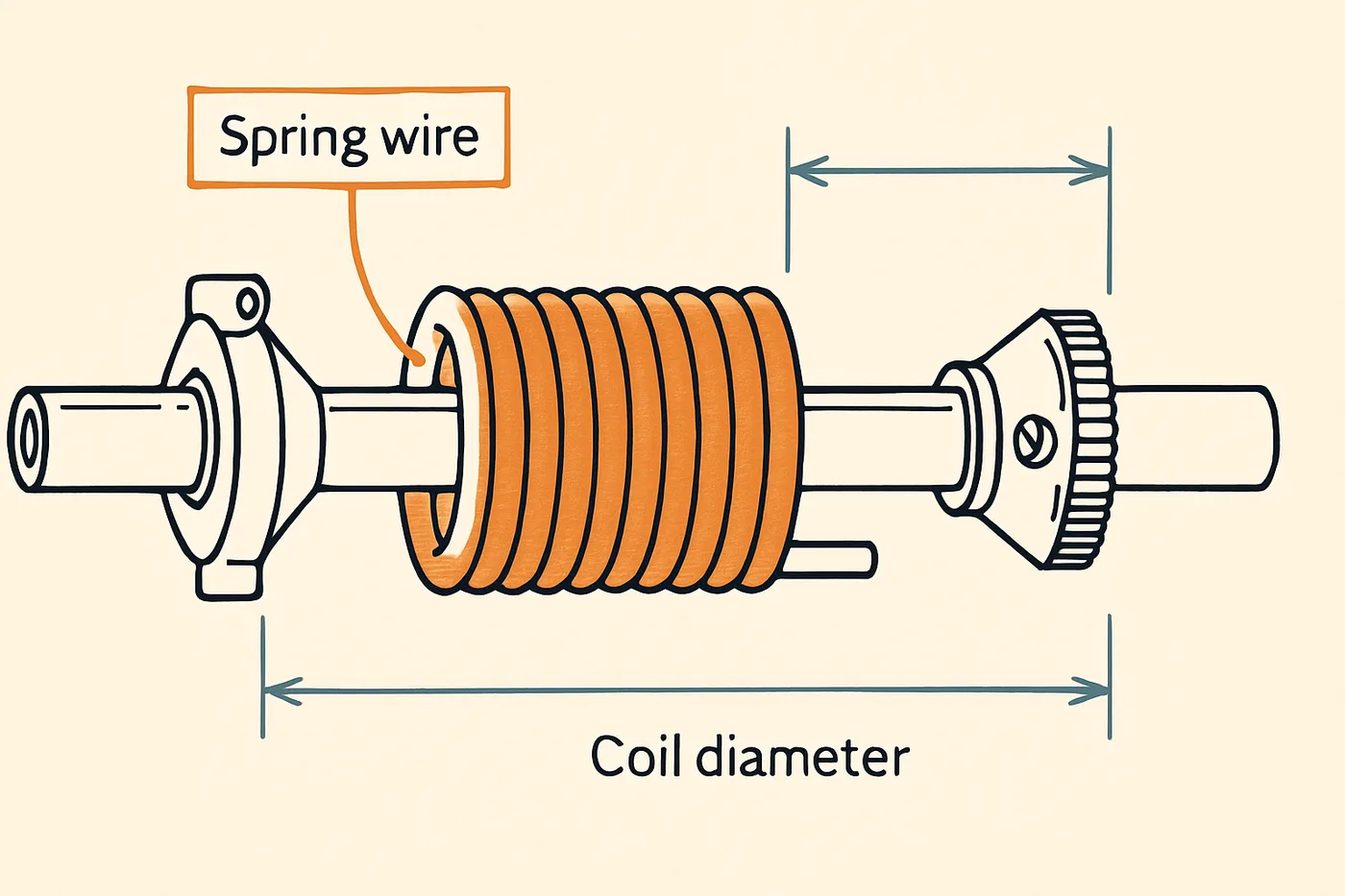
- One or two torsion springs mounted on the shaft, anchored at the center by a stationary cone and at each end by a winding cone fixed to the shaft with set screws.
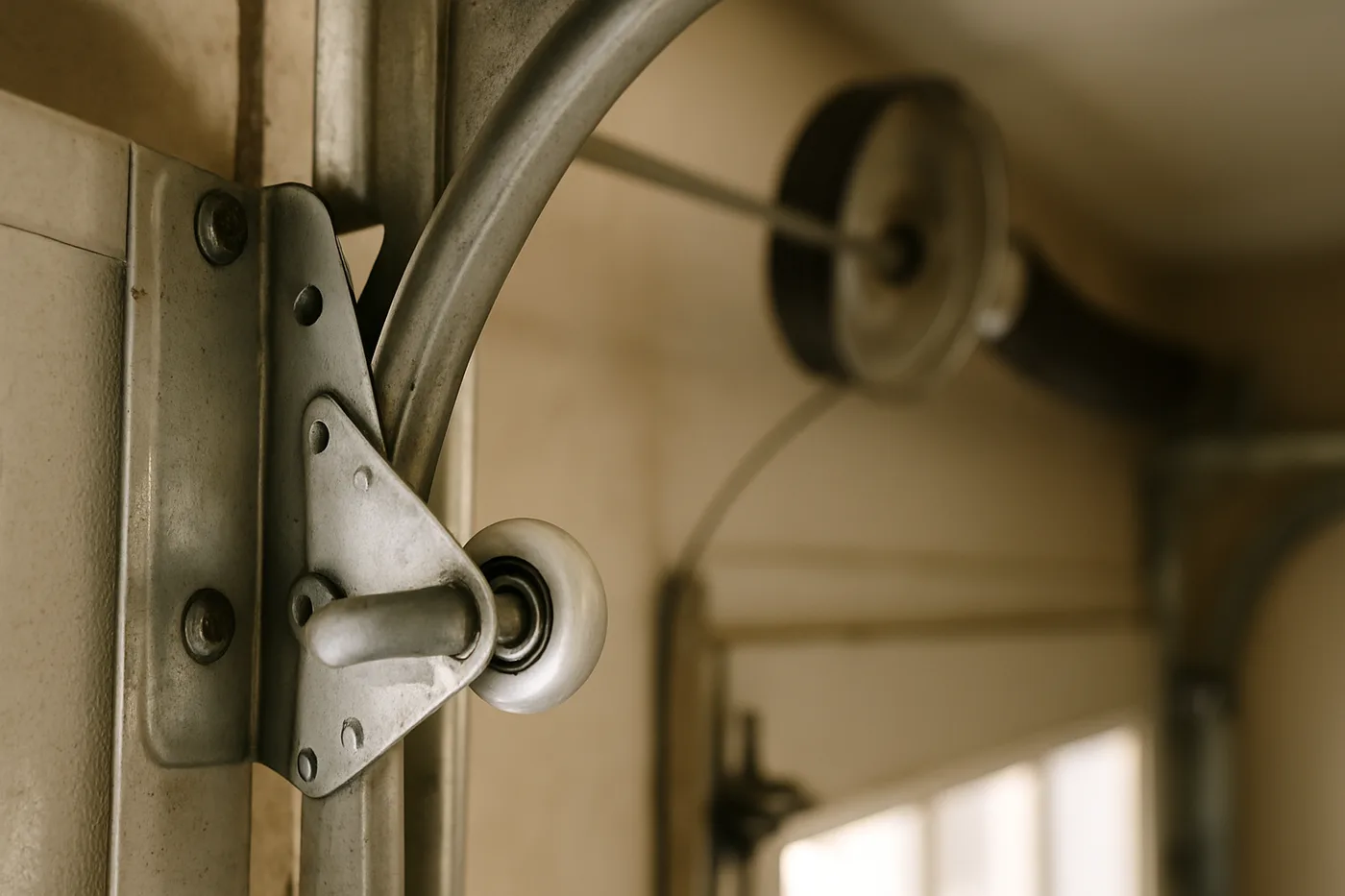
- Two cable drums, one at each end of the shaft, grooved to receive the lift cables.
- Two lift cables, each running from a bottom bracket on the door, up the side of the opening, and onto the drum.
When the door closes, the cables unwind from the drums and pull the springs into a wound state. When the door opens, the springs unwind, rotating the shaft, which rewinds the cables onto the drums and lifts the door. The springs are not what holds the door up. The springs counterbalance the weight of the door so that the opener — or your arm — only has to overcome a few pounds of residual imbalance.
Residential steel doors weigh between 130 and 350 pounds, with insulated double-wide panels sitting at the upper end of that range, between 200 and 350 pounds. The torsion assembly is what makes a 300-pound door feel like it weighs eight.
The spring is the storage medium
Every time the door closes, the torsion spring absorbs roughly 800 ft-lb of torsional stress. That number describes the work done on the spring during the closing cycle. The 236 ft-lb figure above describes the energy held inside the wound spring at rest. Both numbers matter. The first explains why springs fatigue. The second explains why a slipped winding cone can drive a steel bar through drywall or fracture the wrist of the person holding it.
A standard residential torsion spring is rated for approximately 10,000 cycles, or about seven years of twice-daily use. High-cycle oil-tempered springs rated for 25,000 to 100,000 cycles are available as upgrades, and the cost-benefit calculation favors them above a four-cycle-per-day usage threshold. If your door opens and closes more than that — a busy household, a home gym, a workshop entrance — a high-cycle spring outlasts the cheaper option by a margin that justifies the part cost.
Spring torque output is governed by the formula κ = d⁴G / (10.8DN), where d is wire diameter, G is the shear modulus of the steel, D is the coil diameter, and N is the number of active coils. The d⁴ term is what makes wire gauge dominant. A spring built from 0.250-inch wire produces on the order of fifty percent more torque per turn than the same geometry built from 0.225-inch wire. A spring is not interchangeable with one that looks similar. The wire diameter, the coil diameter, the length, and the drum size all interlock.
Why drum size matters
The total turns required to wind a spring follows: total turns = (door weight × drum radius) / IPPT, where IPPT is inch-pounds per turn. The drum radius is in the numerator. A 4-inch drum and a 4.75-inch drum require different springs on the same door. Swapping drum sizes without recalculating the spring puts the assembly out of balance — sometimes by a margin large enough that the door will not stay open, or will slam itself closed on a child or a car bumper.
This is also why a spring replacement is not a parts-store transaction. The technician sizing the replacement is solving for door weight, drum radius, and target cycle life simultaneously, then selecting a wire gauge and coil count that produces the correct IPPT.
How the assembly fails
The torsion spring fails first, in almost every case. Fatigue accumulates at the stress concentration points where the coil binds and unbinds against itself during each cycle. Once a microscopic crack initiates, it propagates with each subsequent cycle until the wire fractures. The break is almost always near the center, where the stationary cone sits, or near the winding cone.
Cold weather accelerates this. Steel contracts at roughly 6.5 millionths of an inch per inch of length per °F, and on a torsion spring that contraction concentrates stress at spots where the metal is already fatigued. A spring approaching the end of its rated life in October will break on the first sub-freezing morning of December. That is not coincidence. That is metallurgy.
The other failure modes follow from the same physics. Cables fray where they wrap the drum under tension. Bearings seize when their grease film breaks down. Drums crack when the cable jumps the groove and loads the flange laterally. Once any of these components fails, the entire assembly is out of equilibrium, and the next cycle stresses everything else harder than it was designed to handle. A door that operates two years out of balance can lose a decade of total service life across the entire assembly — motor, cables, rollers, hinges, and brackets all age faster simultaneously.
What you can verify yourself
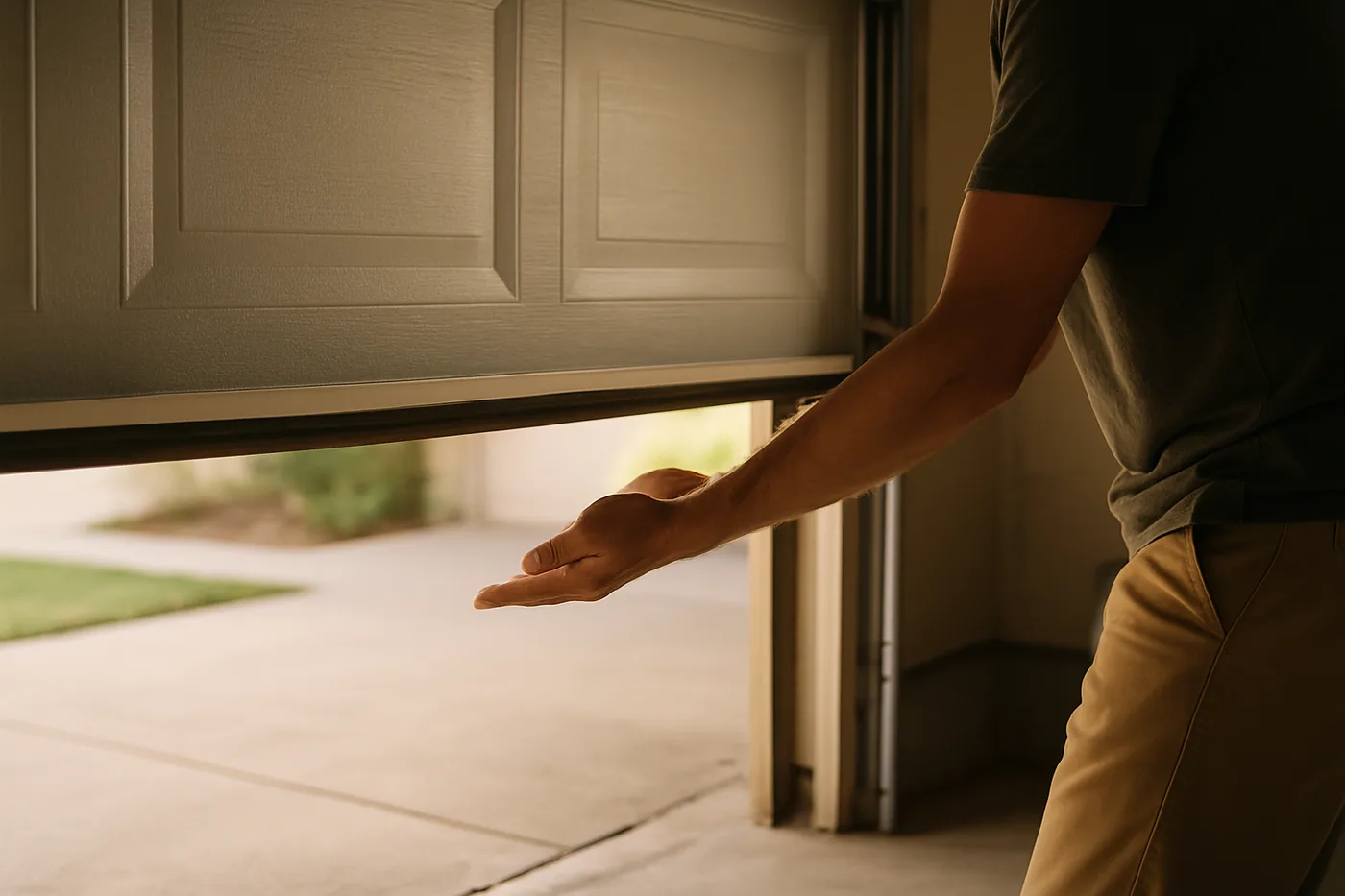
There is real inspection work that does not require touching the spring under load. Pull the opener release while the door is closed and lift the door manually to waist height. Let go. A correctly balanced door will stay put or drift only an inch or two. A door that crashes downward is undersprung. A door that snaps upward is oversprung. Either condition is a service call.
Visually inspect the spring for a visible gap between coils. A wound spring has its coils nearly touching. A gap of a quarter inch or more, anywhere along the length, means the spring has broken or is about to. Check the cables at the bottom bracket for fraying or rust. Check the drums for cracks at the flange.
Lubricate the spring with a light coat of garage door spring lubricant every six months. The spring is under constant tension whether the door is moving or not, which is why it requires more frequent lubrication than rollers, hinges, and bearings, which only need attention once a year. Do not use WD-40. A door treated with WD-40 is measurably drier one month later than a door that was never touched at all — the solvent flushes the existing lubricant out and then evaporates.
What you cannot do safely
Any work that requires loosening the set screws on the winding cone is technician work. The cone is what holds the spring's stored energy against the shaft. Loosening it while the spring is wound releases that energy in the direction of whatever tool is inserted into the cone. A slipped winding bar can fracture a wrist or crack a skull. This is not a warning about a rare event. It is a description of how the energy in the spring leaves the assembly when the restraint is removed incorrectly.
Cable replacement carries the same constraint. The cables are under drum tension whenever the door is down. Releasing a cable from the bottom bracket on a closed door releases the spring's energy through the drum, which spins freely and whips the cable end across the garage.
For homeowners in Nevada, A+ Garage Doors handles spring and cable work as part of their standard garage door repair in Las Vegas service, and Garage Door Pro Services offers a free garage door safety inspection that covers the entire torsion assembly. The inspection tells you whether the spring has cycle life remaining or whether the assembly is approaching failure.
What you can verify yourself: the balance test, the visual coil inspection, the cable check at the bottom bracket, and the six-month lubrication. What you cannot do safely: anything involving the winding cone, the set screws, or the cables under drum tension. The force in the assembly does not care about your confidence level. Call a licensed technician for any tension work.